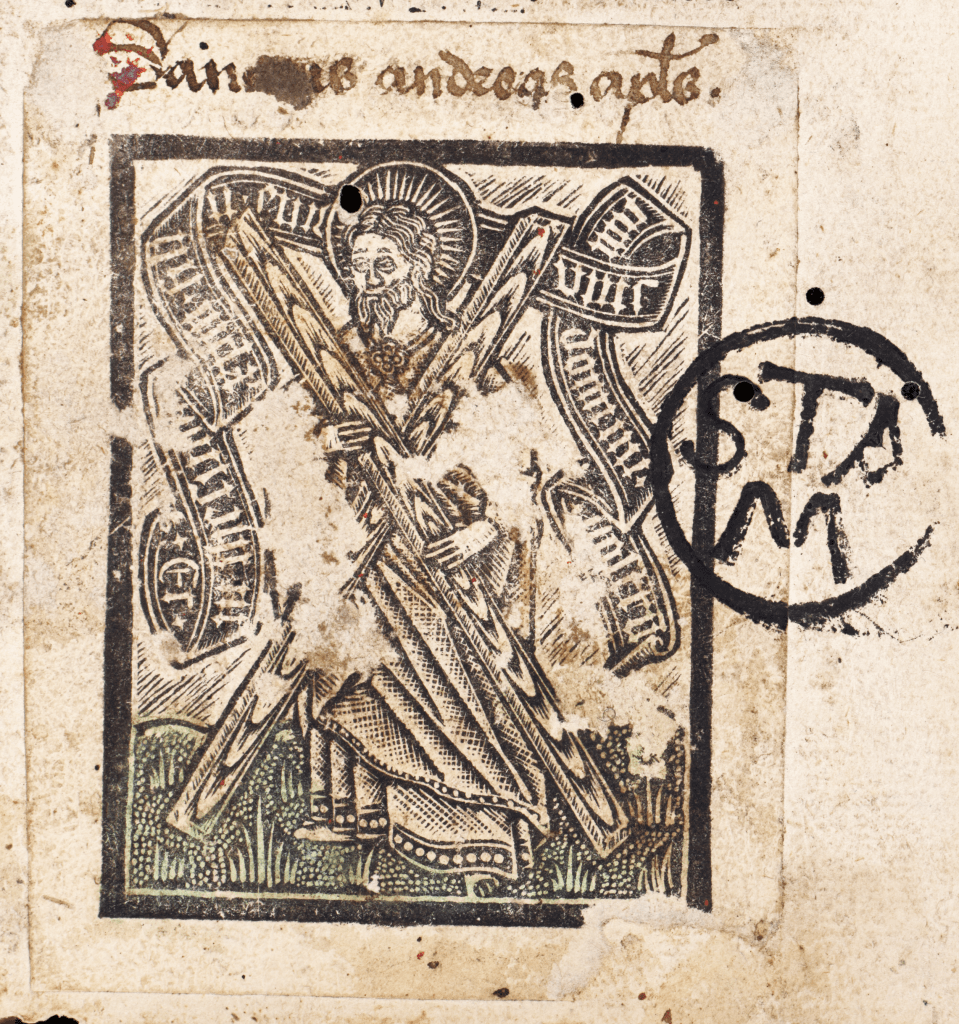
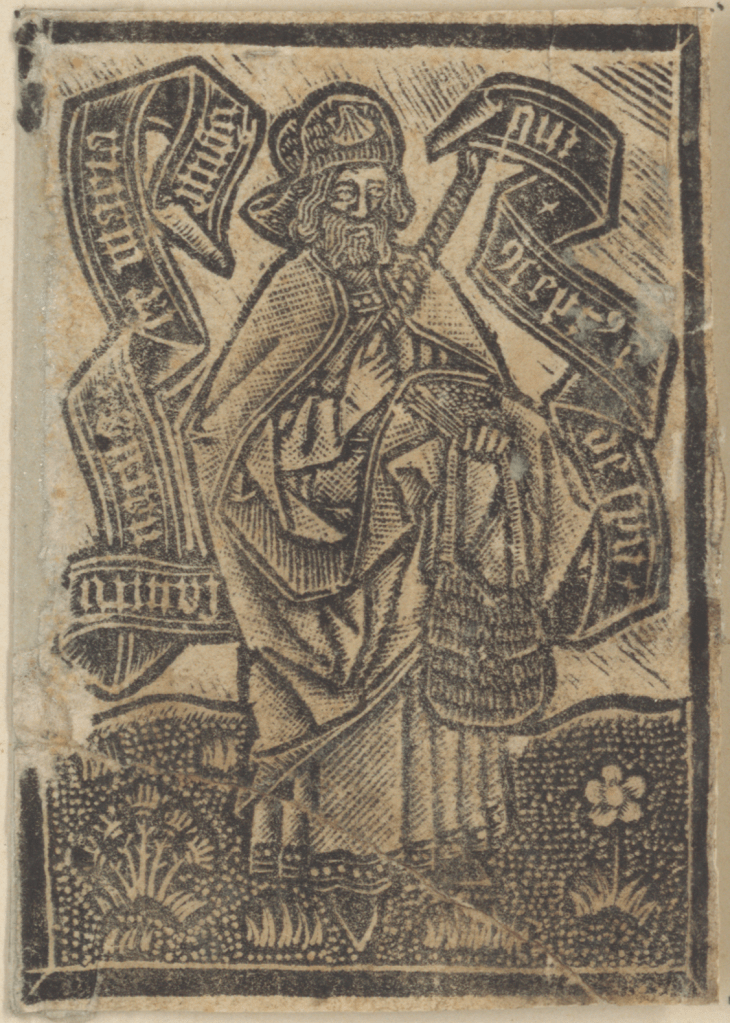
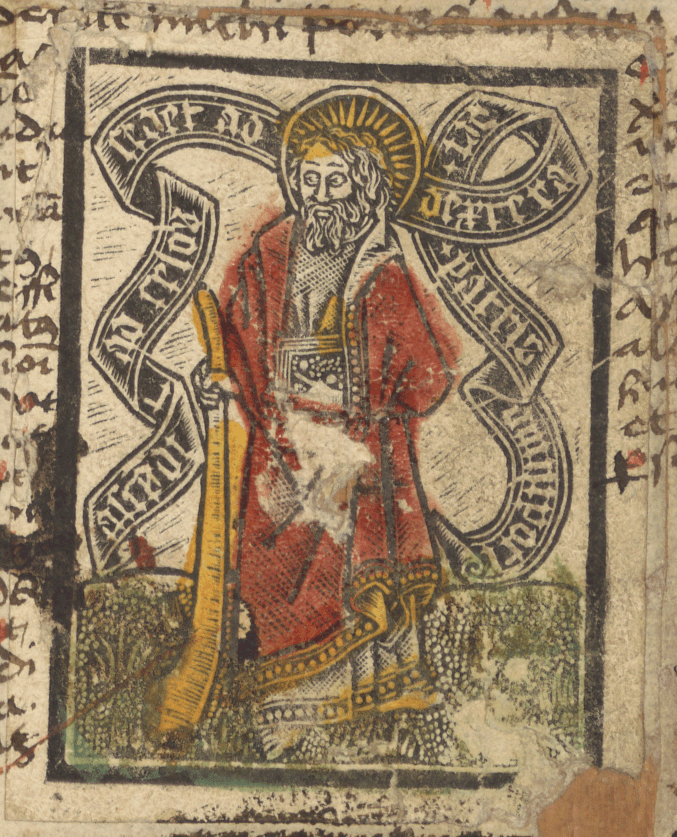
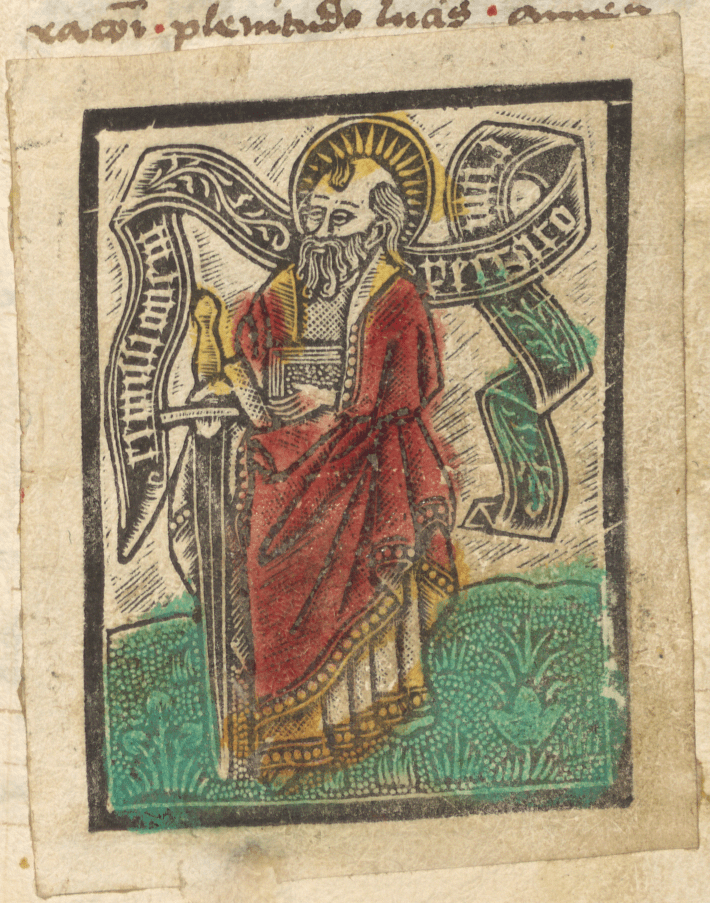
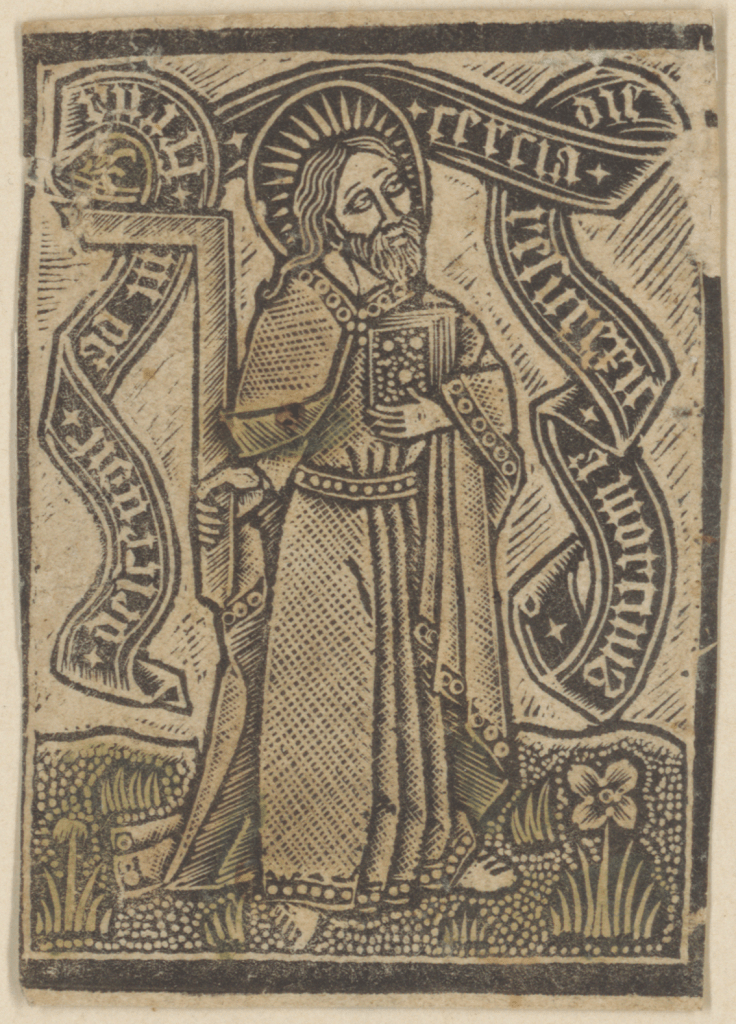
A publication in Gutenberg Jahrbuch, 100 (2025) introduces a previosuly unrecorded dotted impression, discovered during the surveying of the Library at Christ Church, Oxford.
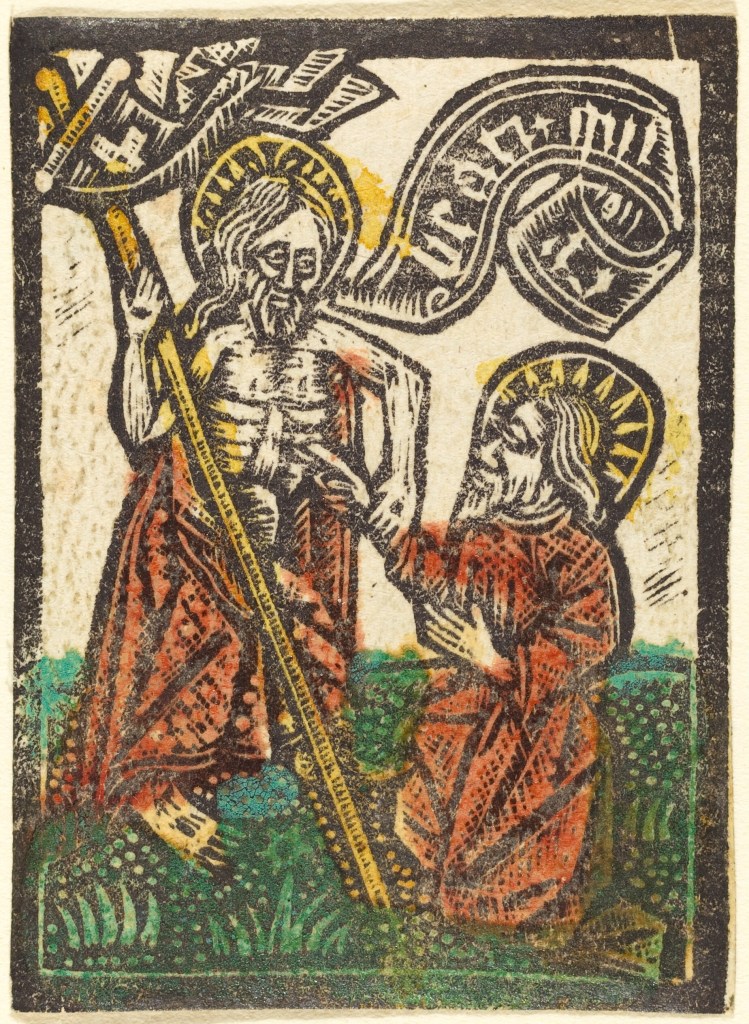
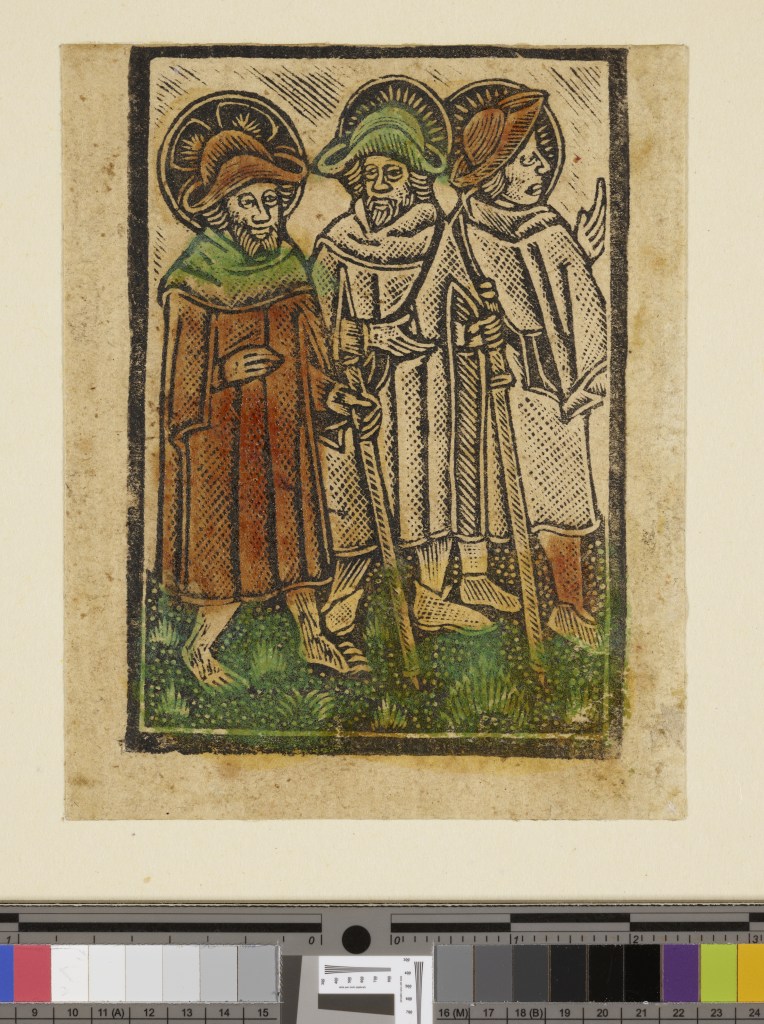
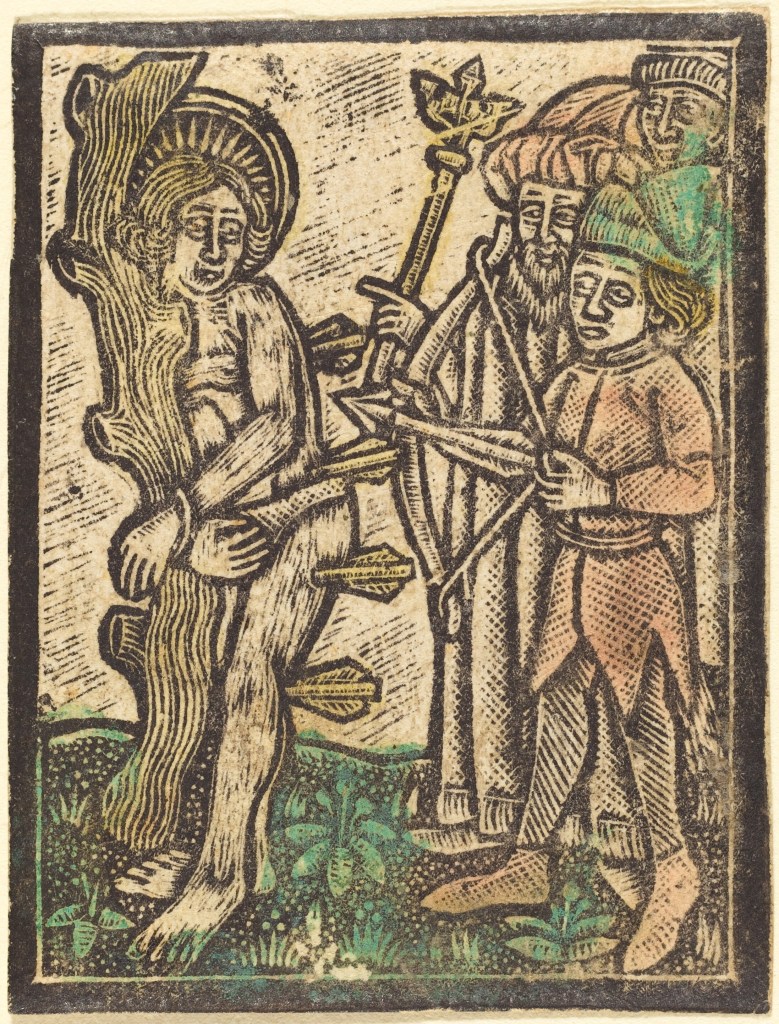
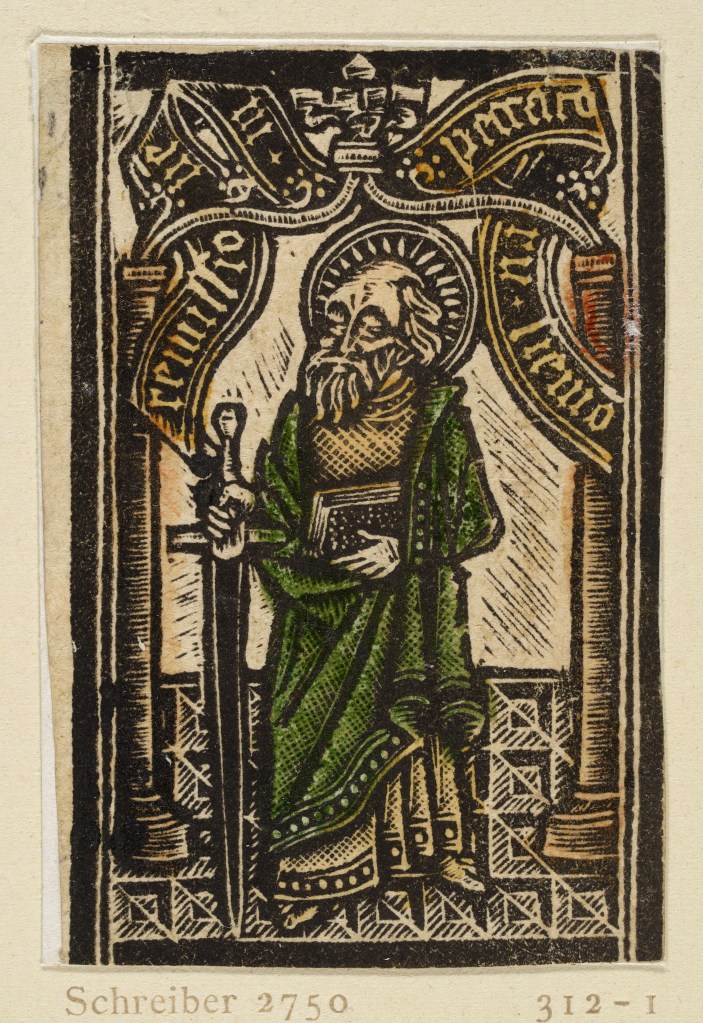
Impressions in the dotted manner were printed from metal plates decorated using a technique in which dots were hammered with a punch over selected parts of the plate to create a textured effect in those areas, the dots showing as white against the inked background. These then are relief prints, just like their woodcut contemporaries, rather than intaglio, but produced on metal rather than wood; the punches depress small areas of metal, creating impressions of dots, circles, flowers, diamonds, stars, or any other decorative motif. The printing surface is what remains of the original surface after it has been cut or punched, the punches creating the ‘dotted’ effect. Punches were used alongside burins for lines and hatching to create designs in which, at their best, remarkable nuance can be introduced, with figures built up using repeating dots and virtually no contours. The technique is also known in French as manière criblé, or in German Schrotschnitt, the individual impressions as Schrotdrucke or Schrotblätter.
The article outlines the history and chronology of this understudied reprographic technique and its use in various contexts: in the production of single leaf impressions; within typographic books; for impressing designs onto book bindings. The context and provenance of the Christ Church impression is discussed, before linking it with a group previously identified by Wilhelm Ludwig Schreiber. The article concludes with some considerations on the place of production and the date of the plate from which the impression was taken.

